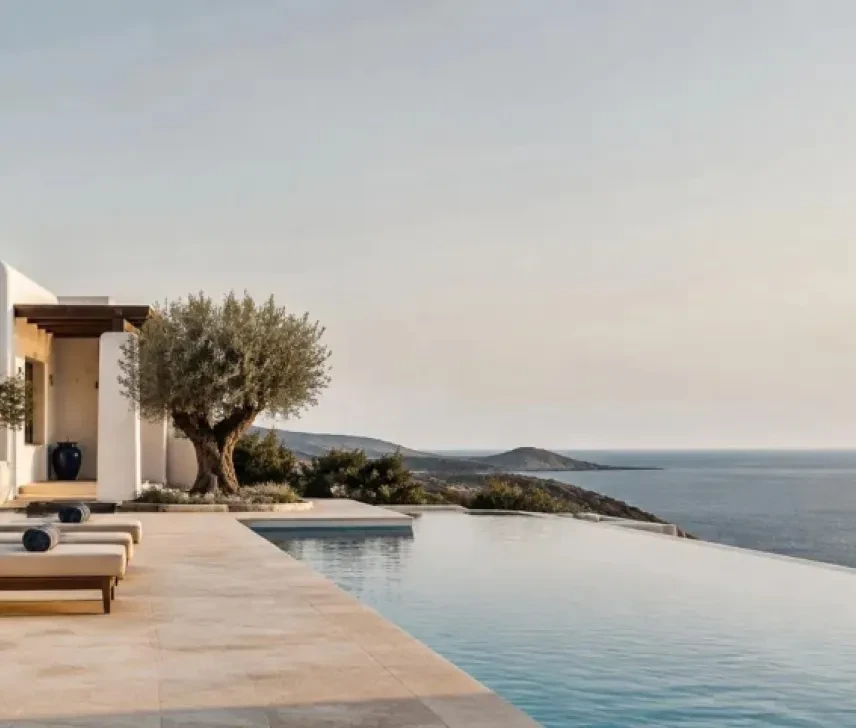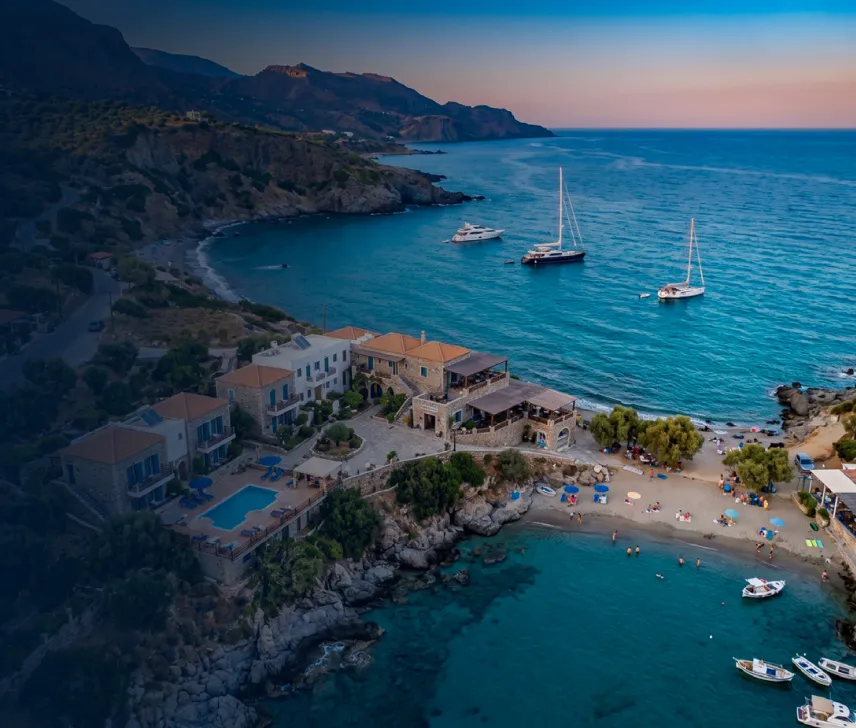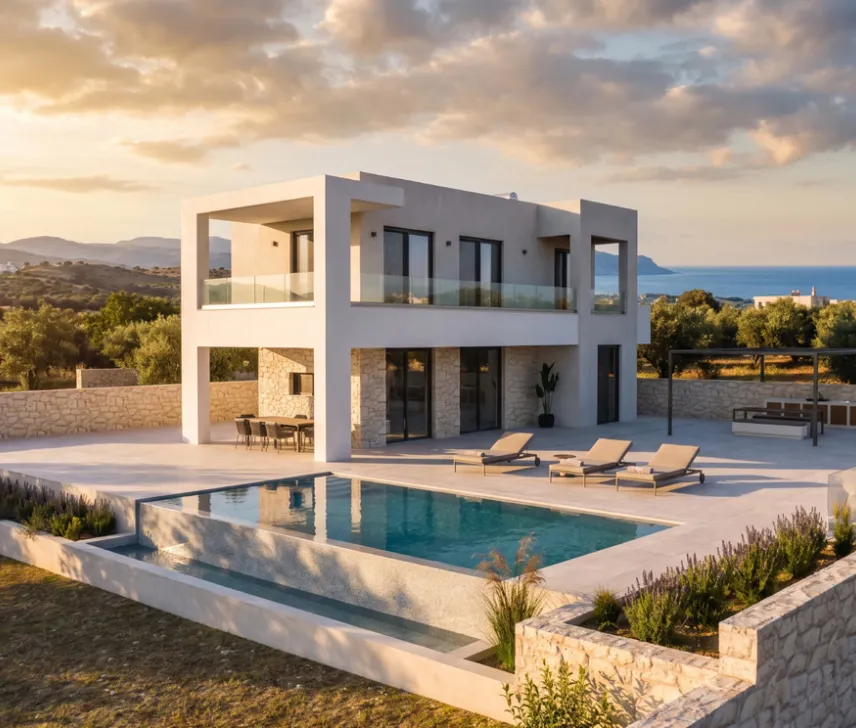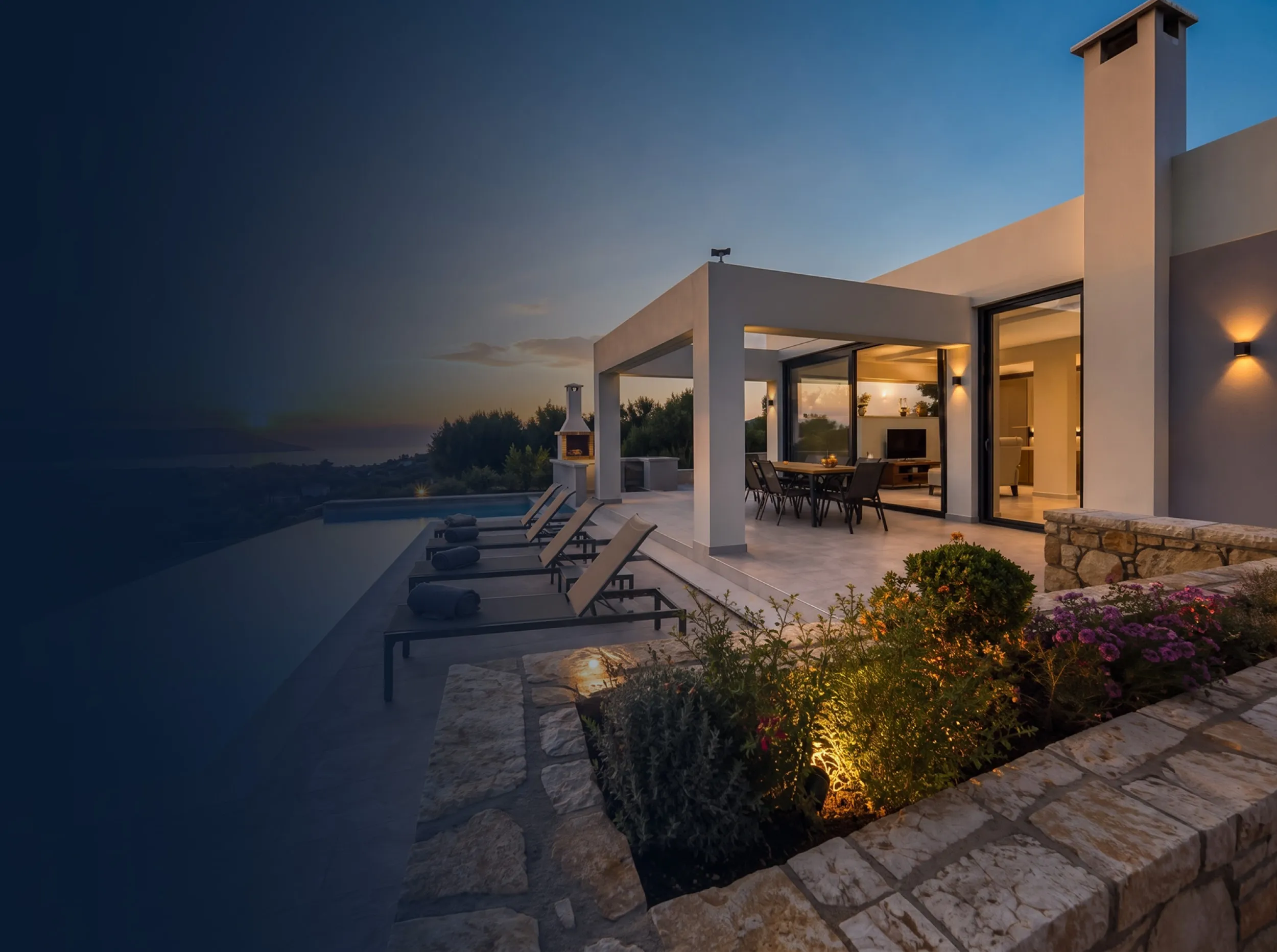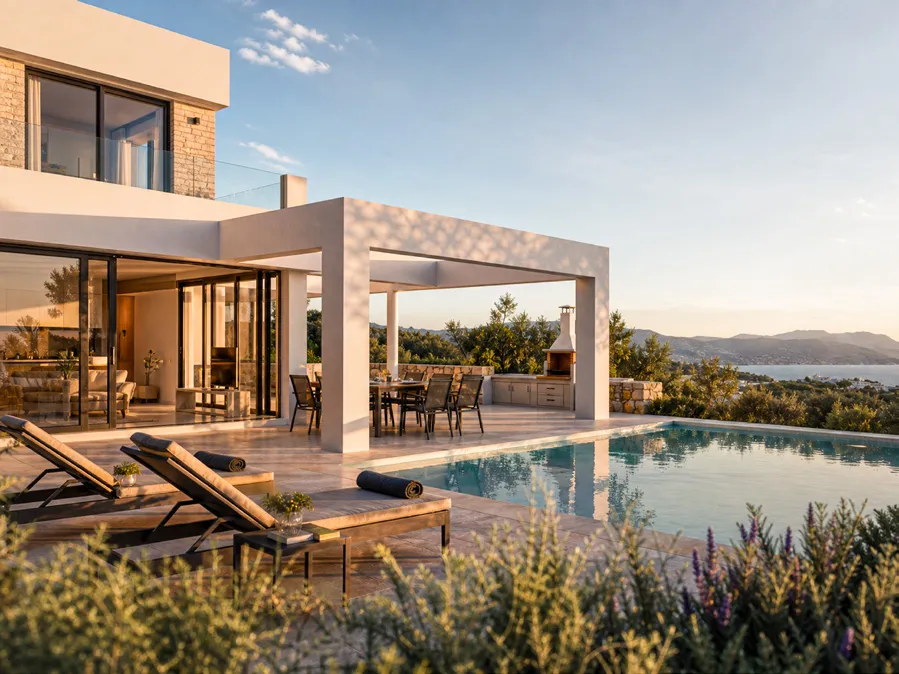
A calm pace, clear sea, delicious food and welcoming people: everything that makes Crete a special place to live.
What is it actually like to live on Crete, rather than spend two weeks here on holiday? The answer depends on where you settle and what you are looking for, but some things are shared by almost everyone who makes the island their home: a calmer pace, a close relationship with the seasons, food that is simple and remarkably good, and people who still take hospitality seriously. Here is an honest look at everyday life on the island.
The climate and the seasons
Crete has a Mediterranean climate with long, hot, dry summers and mild winters. In the lowlands summer highs are often around 30 °C, with more heat on some days and a fresh breeze on others; the south coast tends to be warmer than the north. Winter brings most of the year's rain, sometimes in heavy bursts, and snow on the White Mountains and Psiloritis, while the coast stays green and mild. Houses here are built for the sun, so it is easy to forget that winter evenings can feel chilly indoors: good insulation and heating make a real difference.
Each season has its own character. Spring covers the hills with wildflowers and herbs, and Easter is the most important celebration of the year. Summer is the time of the sea, open-air dinners and village festivals. Autumn brings the grape harvest and the distilling of raki, often a social event in itself. Late autumn and winter belong to the olive harvest, when whole families head to the groves.
The Cretan table
Cretan food is built on what grows nearby, and its foundation is olive oil, used generously in almost every dish. Typical favourites include dakos, a barley rusk topped with grated tomato, crumbled cheese and oil; horta, wild or garden greens boiled and dressed with oil and lemon; fresh vegetables cooked slowly with herbs; and pulses, which are a staple at home. Cheese is a world of its own, from hard graviera to soft, fresh mizithra, and small cheese pies such as kalitsounia appear on every festive table.
The traditional Cretan diet is often cited as a classic example of the Mediterranean diet: plenty of vegetables, greens, pulses and olive oil, moderate amounts of cheese and fish, less meat, and food shared slowly with others. At the end of a meal you will often be offered a small glass of raki, also called tsikoudia, along with fruit or a sweet, whether you ordered it or not.
Philoxenia: the art of hospitality
The Greek word philoxenia literally means friendship towards strangers, and on Crete it is part of everyday life rather than a slogan. A neighbour may leave a bag of oranges or greens at your door; an elderly woman may insist that you come in for coffee; a taverna owner may sit down at your table for a chat. Visitors and newcomers are generally welcomed warmly, and the warmth deepens when people see that you respect local customs, greet them in the village and take part in its life.
The rhythm of village life
Life in a Cretan village follows its own clock. Mornings start early, especially in summer, and the hottest hours of the afternoon are quiet. Evenings are for walks, family visits and long dinners. The kafeneio, the village coffee house, is still a meeting point where news is exchanged. Name days, weddings, christenings and local saints' festivals bring the whole community together, and newcomers are often invited too. If you are used to big-city speed, this rhythm takes some adjusting to, but most people find that it grows on them.
Practicalities
- Healthcare. The main cities have public hospitals, and there are health centres in many smaller towns as well as private clinics and doctors. How you access care depends on your situation and insurance, so look into it before you move.
- Schools. Children can attend Greek state schools; there are also private schools, mostly around the larger cities. Choices for teaching in other languages are limited, so research early.
- Language. English is widely spoken in tourist areas and by younger people, but even a little Greek goes a long way. Start with greetings and thank-yous; people genuinely appreciate the effort.
- Getting around. In the villages a car is practically essential. Intercity buses connect the main towns, but rural connections are limited.
- Paperwork. Many everyday steps, from utility contracts to buying property, require a Greek tax number (AFM). Bureaucracy can take time, and a good local accountant or lawyer helps.
Is it right for you?
Life on Crete is not an endless holiday. Winters are quieter, some resort businesses close outside the season, and rainy weeks do happen. The best way to know whether the island suits you is to spend time here in different seasons, not only in July. If you are thinking of making Crete your home, book a consultation and we will share what we know about the areas where we work.