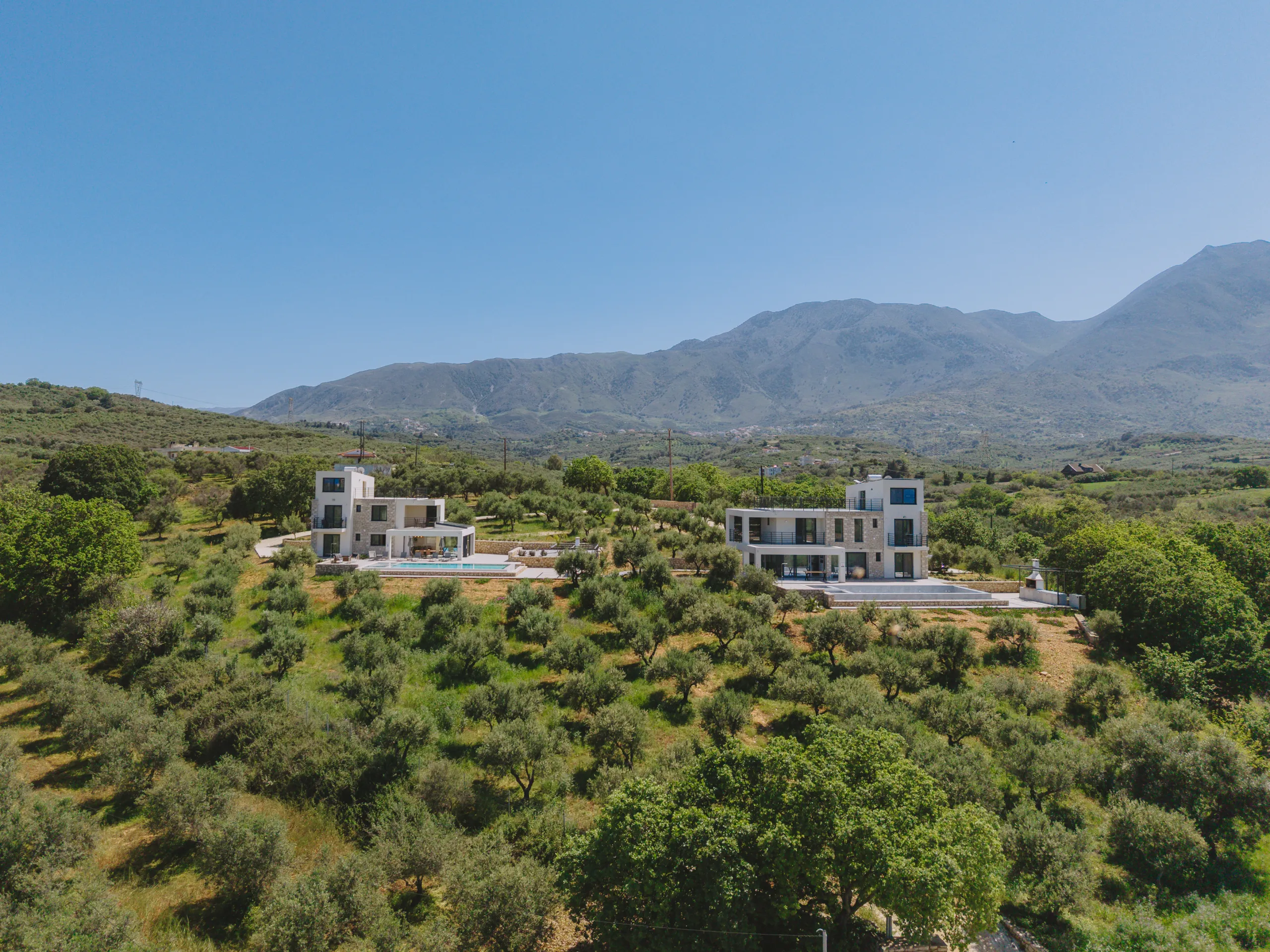
Location, title and legal checks, building conditions, access, utilities and extra costs: a practical checklist before you buy a plot in Crete.
For anyone planning to build on Crete, buying land is the first and most important step. The plot determines not only the cost of the project but also what you can build, how the house will sit in the landscape and how easy everyday life there will be. A careful review before you sign helps avoid legal and technical problems later. Below is a practical overview of what we recommend checking, based on our work with clients in Crete.
This is general guidance, not legal advice. Planning rules in Greece depend on the specific zone and plot, so the final word always belongs to your lawyer and your engineer.
Location matters
View, access, distance from the sea and proximity to towns and villages affect both the price of a plot and its future value. Before you fall for a view, think about daily life: how far is the nearest shop, school or medical centre, how long is the drive to the airport, and what is the area like out of season? If you plan to rent the property out, consider what guests look for in that particular area.
Visit the plot more than once, ideally at different times of day and, if possible, in different seasons. Wind, sun, noise and road conditions can change your impression considerably.
Legal review is essential
Ownership clarity, planning conditions and restrictions should be checked before purchase. In practice, this means appointing an independent lawyer who will:
- verify the seller's title and the chain of ownership;
- check the plot's registration in the land registry (cadastre) and that the boundaries match the documents;
- look for mortgages, claims or other encumbrances;
- confirm that there are no disputes with neighbours or co-owners.
Restrictions deserve particular attention. Depending on its location, a plot may be affected by rules on forests, archaeological sites or the coastline, among others. Your lawyer and engineer can tell you whether any of these apply to your plot.
What can be built: planning and building conditions
One of the key questions is whether the plot lies inside or outside a town plan or settlement boundary. The building conditions — whether you can build at all, how many square metres, at what height and how far from the boundaries — differ between these cases and from zone to zone. We deliberately do not quote figures here: the rules depend on the zone, and your engineer and lawyer confirm what applies to a specific plot. Ask for that confirmation in writing before you commit.
Topography and infrastructure
The shape of the plot, its slope, the access road and the potential for utility connections directly affect the project.
- Topography. A steep site can offer wonderful views but usually requires more excavation and retaining walls. A narrow or irregular plot may limit the layout of the house.
- Access road. Check that the plot has both legal and practical access, and what condition the road is in. A road that exists on the ground is not always recognised on paper.
- Utilities. Find out how far the nearest water, electricity and sewage networks are and what a connection would involve. In some areas alternative solutions are needed.
A topographic survey and an engineer's site visit early on give you a much clearer picture of what building on the plot will really involve.
Practical steps for buyers
- Get a Greek tax number (AFM). You need one to buy property in Greece. A lawyer or accountant can help you obtain it.
- Appoint a lawyer to carry out the legal checks and represent your interests.
- Commission surveys — a topographic survey and, where needed, other technical checks.
- Sign at the notary. The purchase contract is drawn up and signed before a notary.
Additional costs apply
Taxes, legal and notary fees, and technical surveys should always be part of your decision. Their amount depends on the price, the type of transaction and current legislation, so ask your lawyer for an estimate before you agree on the price. It is far better to know the full cost of acquiring the plot from the start than to discover it on the day of signing.
Land and construction together
The best results come when a plot is assessed with the future house in mind. At Aslanidis Estate we help clients search for land and look at each plot from a builder's point of view: what can be built, how the house could be positioned and what the site will require. This makes it much easier to compare plots on a like-for-like basis — and to see the real cost of a plot that looks inexpensive at first.
Next step
If you have found a plot or are just starting your search, we will be glad to discuss it with you. Tell us which area interests you and what kind of home you have in mind, and we will help you work out the next steps. Book a consultation.